
Laboratory Fume Hoods
High-performance fume hoods engineered to protect laboratory personnel from hazardous vapors, gases, and aerosols. Ducted, VAV, and ductless models available for every application and facility type.

The Right Hood for Every Application
We supply and install a full range of fume hood types — from standard ducted hoods to energy-saving VAV systems and portable ductless units — matched to your specific hazard level, workflow, and facility infrastructure.
Standard Ducted Fume Hood
The workhorse of laboratory ventilation. Connects to your building exhaust system for continuous removal of hazardous vapors, gases, and particulates.

High-Performance VAV Hood
Variable air volume technology automatically adjusts airflow based on sash position, reducing energy consumption by up to 60% compared to constant-volume hoods.
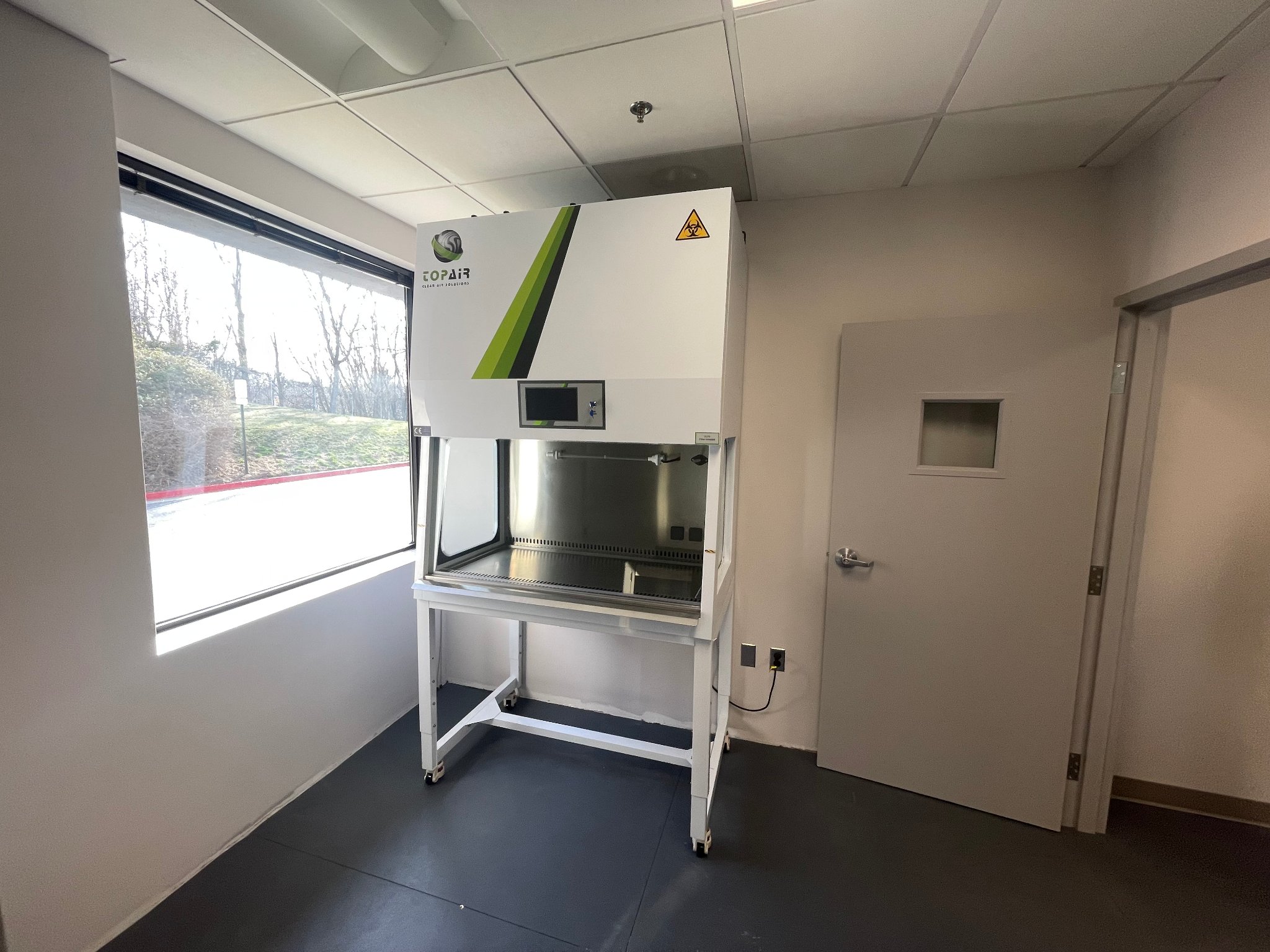
Ductless Fume Hood
Self-contained filtration using activated carbon and HEPA filters. Ideal for labs without ductwork or where portability and flexibility are required.

Snorkel & Elephant Trunk Exhaust
Flexible arm exhaust snorkels capture fumes directly at the source. Perfect for spot ventilation at open benches, instrument exhausts, and areas where a full enclosing hood is not practical or feasible.
Built for Safety, Designed for Efficiency
Every fume hood we supply is specified and installed to deliver reliable containment performance while minimizing energy consumption and maintenance overhead.
Annual Face Velocity Certified
Every fume hood we supply is tested to annual face velocity certification standards, verifying face velocity, containment, and airflow uniformity before installation.
Bypass & Variable Air Volume
Available in bypass (constant volume) and VAV (variable air volume) configurations to match your HVAC system and energy efficiency requirements.
Corrosion-Resistant Liner
Interior liners are constructed from chemical-resistant polypropylene or epoxy-coated steel, protecting against acids, bases, and organic solvents.
Sash Options
Vertical, horizontal, and combination sash configurations available. Auto-closing sashes and sash stops help maintain safe face velocity at all times.
Integrated Service Fixtures
Gas, vacuum, water, and electrical service fixtures can be factory-installed and positioned to match your workflow — no field modifications needed.
Ductless & Ducted Models
Ducted models for high-hazard applications and ductless recirculating hoods for lower-hazard work where ductwork installation is impractical.
Snorkel & Elephant Trunk Exhausts
Flexible arm snorkel exhausts capture fumes at the source — ideal for spot ventilation at open benches, equipment exhausts, and areas where a full enclosing hood is impractical.
Standard Specifications
Custom widths, liner materials, and service fixture configurations available. Contact us for project-specific requirements. Additional dimensions, designs, and materials are available in our full catalog — contact USLabs LLC for the complete product list.

What Fume Hood Do I Need?
Choosing the right fume hood depends on your application, chemicals, airflow infrastructure, and compliance requirements. USLabs specifies, supplies, and installs the right hood for every lab environment.
General Chemistry & Research
Standard ducted fume hoods with bypass airflow are the go-to for most academic and research labs. Handles acids, bases, solvents, and general chemical work.
Recommended: Standard Ducted or VAV Hood
Energy-Conscious Facilities
Variable Air Volume (VAV) hoods automatically reduce airflow when the sash is lowered, cutting HVAC energy costs by up to 60% without sacrificing safety.
Recommended: High-Performance VAV Hood
No Ductwork / Portable Needs
Ductless recirculating hoods use activated carbon and HEPA filtration — no exhaust connection required. Ideal for low-hazard work, field labs, or retrofit spaces.
Recommended: Ductless Recirculating Hood
Not sure which type or model is right for your project? Request a free consultation and our team will spec the right hood for your application.
Need a fume hood spec'd for your project?
We'll match the right model, size, and exhaust configuration — and install it.
Polypropylene Fume Hoods
Polypropylene fume hoods are engineered for the most chemically aggressive laboratory environments. Where standard steel or fiberglass hoods fall short, solid polypropylene construction delivers unmatched resistance to concentrated acids, halogens, and corrosive vapors.
USLabs supplies and installs polypropylene fume hoods for semiconductor fabrication, trace metal analysis, wet chemistry, and any application where chemical attack on the hood structure is a concern.
Acid & Halogen Resistant
Solid polypropylene is impervious to hydrofluoric acid, hydrochloric acid, nitric acid, and halogenated solvents.
Non-Porous Construction
Seamless thermally welded interior surfaces prevent chemical absorption and simplify decontamination.
No Metal Components
All-plastic construction eliminates corrosion risk — critical for trace metal and semiconductor labs.
Annual Face Velocity Certified
Containment performance verified to annual face velocity certification standards — same compliance bar as steel hoods.
Integrated Wash-Down
Optional built-in wash-down systems and cup sinks for labs handling perchloric acid or heavy particulate work.
Custom Sizing Available
Available in standard 4', 5', and 6' widths or custom dimensions to fit your exact lab layout.
Best Applications for Polypropylene Fume Hoods
Semiconductor & Microelectronics
HF acid etching, wafer cleaning, and photolithography processes demand a hood that can withstand continuous exposure to hydrofluoric and sulfuric acids without degradation.
Trace Metal & ICP Analysis
Metal-free polypropylene construction prevents contamination of ultra-low-concentration samples in ICP-MS, ICP-OES, and atomic absorption workflows.
Wet Chemistry Labs
High-volume acid digestion, sample preparation, and dissolution work where concentrated mineral acids are used daily.
Perchloric Acid Applications
Polypropylene hoods with integrated wash-down systems are the preferred solution for perchloric acid work where residue buildup poses an explosion risk.
Fume Hood Certification & Annual Maintenance
Installation is just the beginning. Fume hoods require annual face velocity certification to verify face velocity, containment performance, and airflow uniformity — and regulatory compliance depends on it. Skipping annual testing puts your personnel, your facility, and your certifications at risk.
USLabs provides ongoing fume hood certification testing, preventive maintenance, sash and sash stop inspection, exhaust blower checks, and service fixture verification — keeping your hoods performing to spec year after year.
- Annual face velocity & containment testing
- Sash, sash stop, and counterweight inspection
- Exhaust blower and ductwork performance check
- Service fixture leak testing — gas, vacuum, water
- Certification documentation for regulatory compliance
- Scheduled maintenance programs available

Annual certification keeps your lab compliant and your team safe.
Fume Hood Alarms & Airflow Monitors
A fume hood is only as safe as its airflow. Alarm systems provide continuous real-time monitoring of face velocity and sash position — alerting personnel immediately when conditions fall outside safe operating parameters.
Airflow / Face Velocity Monitors
Continuous display of face velocity (FPM) with audible and visual alarms when airflow drops below the safe threshold — typically 80 FPM. Required by OSHA 1910.1450 in many laboratory settings.
Low-Flow Alarms
Dedicated low-flow alarm units trigger when exhaust velocity falls below the set point, warning users before hazardous vapors can escape the hood face. Available as standalone units or integrated into the hood control system.
Sash Position Alarms
Audible alarms activate when the sash is raised above the safe working height, prompting users to lower it and restore proper containment. Critical for maintaining face velocity on bypass and VAV hoods.
VAV Controller Displays
Variable air volume hoods include integrated digital controllers that display real-time airflow, sash position, and alarm status — with setpoint adjustment and data logging capability.
Remote Alarm Panels
Centralized alarm panels allow facility managers to monitor multiple hoods from a single location — ideal for large labs, multi-room facilities, and buildings with a central safety monitoring station.
BAS / BMS Integration
Alarm and airflow data can be integrated into building automation systems (BAS/BMS) via Modbus, BACnet, or analog outputs — enabling centralized monitoring, trending, and automated HVAC response.
Are your alarms calibrated?
Alarm setpoints drift over time. Annual certification includes verification of alarm trigger points against measured face velocity — confirming your monitors will alert at the correct threshold, not just when airflow has already failed dangerously.
USLabs calibrates and documents alarm setpoints as part of every annual face velocity certification visit. We also supply and install replacement alarm units, upgrade older analog monitors to digital displays, and integrate new alarms into existing hood installations.
Need fume hoods for your lab?
Our team will help you select the right hood type, size, and configuration — and manage the full installation as part of your lab project.